
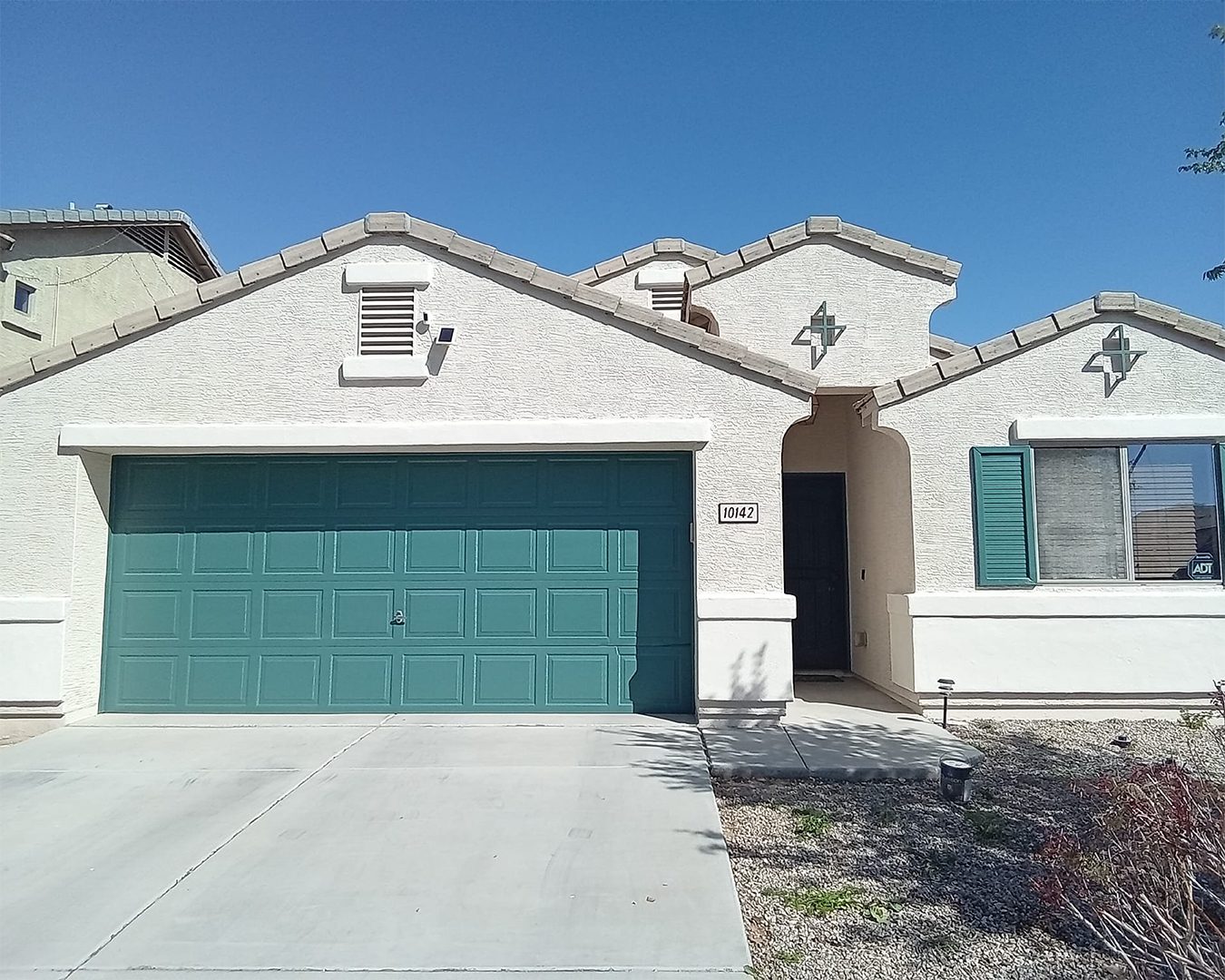
How to Choose Exterior Paint Colors for Your Arizona Home
Choosing an exterior paint color in Arizona is a different decision than it is anywhere else in the country. Between the intense sun, monsoon humidity, stucco-dominant architecture, and HOA guidelines that vary by neighborhood, there’s a lot more to think about than just what looks good on a swatch. Get it right and your paint job looks great for seven years or more. Get it wrong and you’re fading, peeling, and repainting ahead of schedule.
The right exterior color doesn’t just protect your home — in Arizona’s competitive real estate market, it can meaningfully affect resale value and days on market. The guide below covers everything you need to make the right call. This guide walks you through everything, from matching your fixed accents to choosing the right finish for Arizona’s climate — so you can make a confident decision before the first brushstroke of an exterior paint project.
Start With What’s Already Fixed
Before you look at a single color chip, take stock of the elements on your home that aren’t changing: your roof, stonework, brickwork, or masonry. These fixed features set the foundation for every color decision you make, and ignoring them is the most common mistake homeowners make when choosing exterior paint.
In Arizona, most homes have tile roofing in terra cotta, brown, or weathered gray tones. If your roof leans warm, your exterior palette should follow suit. Here are some reliable pairings to work from:
- Red or terra cotta tile → warm with yellow, cream, sage, taupe, or beige
- Brown or weathered tile → earthy neutrals, warm greige, or desert sand tones
- Gray tile → cool grays, soft whites, and blue-adjacent earth tones
- Stone or block veneer → draw from the undertones in the stone itself
Unless you’re planning to replace these elements, your color palette needs to work with them — not compete against them.
Consider Your Surroundings
Your home doesn’t exist in isolation. The colors on neighboring homes, the landscaping in your front yard, and the way light hits your exterior throughout the day all affect how your paint choice reads in the real world — and in Arizona’s strong sunlight, those effects are amplified.
Your neighborhood
You want a color that gives your home character without clashing with its surroundings. Look at the two or three homes closest to yours and avoid exact color matches. The goal is to stand out in a complementary way, not a jarring one. In many Phoenix and Scottsdale communities, HOA guidelines will also define your approved palette — always check these before you fall in love with a color.
Your landscaping
Bright flowering landscaping — bougainvillea, desert blooms, colorful cacti — reads better against a neutral or lighter home color that doesn’t compete. Simple xeriscaping or predominantly green desert plants give you more freedom to go bolder or darker with the home itself.
Sun and shade
Arizona sun is unforgiving, and the way paint looks at 7am is completely different from how it looks at 2pm. A color that appears warm and inviting on a north-facing wall can look harsh and flat on a south-facing wall under direct midday sun. Before committing, test your top choices by painting a section on different sides of the house and observing them throughout the day.
Use a Three-Color Scheme
The most reliable approach to exterior color selection — regardless of architectural style — is a three-color scheme. It provides structure, prevents visual chaos, and gives you room to show personality without going overboard.
- Field color: The primary color covering the bulk of your exterior walls. This is your biggest decision and should be your most neutral or grounded choice.
- Accent color: Used on prominent features like the front door, shutters, and garage door. This is where you can be bolder — a navy door on a greige home, or a deep charcoal door on a warm white stucco are both Arizona-proven combinations.
- Trim color: Applied to casings, railings, fascia, and detail work. Typically lighter or darker than the field color to define edges and add depth. White and off-white trims remain the most versatile option.
When selecting shades, use contrast intentionally. A darker field color reads better with a lighter trim. A light or neutral field color can support a bolder, darker trim. Avoid choosing three colors that are too similar in tone — the scheme will flatten out and lose definition, especially under Arizona’s bright sky.
Arizona-Proven Color Palettes
Trends come and go, but certain color families consistently perform well on Arizona homes — both aesthetically and in terms of how they hold up to UV exposure and heat. Here’s what works:
Warm neutrals and greige
Greige — a blend of gray and beige — has become one of the most popular exterior color families in the Southwest. It complements desert landscaping, pairs naturally with tile roofing, and reads as sophisticated without demanding attention. Research has found that greige exteriors can add measurable resale value, which says something about its broad appeal.
Classic grays
Gray works on almost any Arizona home style and gives you a modern, clean look that holds up well under strong sun. Lighter grays read fresh and open; darker charcoal tones make a stronger statement. Benjamin Moore options worth considering include Onyx, Kendall Charcoal, Cape May Cobblestone , Cobblestone Path, Iron Mountain, and Bracken Slate.
Whites and off-whites
White never goes out of style and gives stucco homes a crisp, clean appearance that photographs well and appeals broadly. The key in Arizona is choosing an off-white with warm undertones — pure bright whites can look stark under direct sun. Benjamin Moore Simply White, White Dove, and Seapearl are all reliable starting points.
Navy and deep accent tones
Navy as an accent — particularly on front doors and shutters — has moved firmly into mainstream territory and looks especially strong paired with white or warm neutral stucco. For full-home navy, it’s a bold call but can work beautifully on the right architectural style with white trim. Sherwin Williams Naval and Benjamin Moore Hale Navy are the two benchmark options.
Earth tones and desert-inspired palettes
Sandy tans, warm taupes, and muted terracotta tones connect naturally to the Arizona landscape and tend to age gracefully in the climate. These palettes work especially well in Tucson, Sedona-influenced communities, and neighborhoods with heavy desert xeriscaping. Olympic Mountains and Barren Plain are two great beige options that make your home look warm and inviting.
Choose the Right Finish for Each Surface
Color gets most of the attention, but finish is what determines how your paint looks day-to-day and how long it lasts. In Arizona, finish selection matters more than in milder climates because the sun amplifies sheen and heat accelerates wear.
- Stucco walls
Eggshell is the standard recommendation. It’s durable, hides surface imperfections, and provides a low-shine finish that doesn’t glare in direct sun. Flat finishes are sometimes used but offer less washability and durability. - Trim, fascia, and casings
Satin or semi-gloss. These surfaces take more wear and benefit from added durability and cleanability. The slight reflectivity also helps trim pop against the field color. - Front door
Semi-gloss or high-gloss. Doors are a focal point and gloss finishes hold up well to frequent contact. They’re also easier to wipe down. - Garage door
Satin or semi-gloss, matching or complementing your trim color. Avoid flat finishes on garage doors — they show dirt and hand marks quickly.
For homes with newer construction and fewer surface imperfections, moving up one sheen level from the standard recommendation is reasonable. Older stucco with more texture and repair work benefits from staying at eggshell or below to minimize what the finish draws attention to.
Choose Paint Formulated for the Arizona Climate
Not all exterior paints are created equal, and in Arizona, the formula matters as much as the color. Standard exterior paints designed for mild climates will fade, chalk, and fail faster in Phoenix or Tucson’s conditions.
Acrylic latex for stucco and masonry
For stucco, masonry, block, and similar surfaces — which make up the majority of Arizona homes — 100% acrylic latex exterior paint is the standard. It flexes with temperature changes (critical when surfaces swing between cold desert nights and 110-degree summer days), resists moisture infiltration during monsoon season, and holds color better under UV exposure than oil-based alternatives.
Southwest-formula products
Several major paint manufacturers offer formulas specifically engineered for high-UV, high-heat environments. These products typically include enhanced fade resistance, mildew inhibitors relevant to monsoon humidity, and elastomeric properties that help seal minor cracks. Ask your paint supplier about Southwest or desert-climate formulations when making your product selection.
Paint grade tiers
Exterior paint is generally sold across three quality tiers: production-grade (entry-level), midline, and premium. In Arizona’s climate, premium-grade paint pays for itself. A quality acrylic exterior paint job on stucco should last approximately seven years with proper maintenance. Lower-grade products will fall short of that, meaning you’re repainting sooner and spending more over time than if you’d bought premium from the start.
Elastomeric coatings for older stucco
Homes with aging stucco, hairline cracks, or extensive repair work may benefit from an elastomeric coating rather than standard paint. Elastomeric products are thicker, bridge minor cracks, and provide superior waterproofing — important for any home heading into monsoon season. If you’re not sure whether your home qualifies, a free inspection will tell you.
Lower-grade products will fall short of that, meaning you’re repainting sooner and spending more over time than if you’d bought premium from the start. Not sure what to budget? See our full breakdown of how much it costs to paint a house.
Field-Test Before You Commit
No matter how confident you feel about a color after looking at swatches, chips, and online visualizers, nothing replaces seeing paint on your actual walls under actual Arizona light. Color reads differently on a 4×4 inch chip than it does across 2,000 square feet of stucco.
The right approach: purchase quart-size samples of your top two or three color candidates and paint test sections on different sides of the house. Give yourself a few days to observe them at different times of day — morning, midday, late afternoon, and dusk. Ideally, test sections should be large enough to include your intended field color, accent, and trim together so you can see how the full scheme interacts.
This step adds a day or two to your planning process and costs almost nothing. It has saved many homeowners from a color decision they would have regretted for the next seven years.
Ready to Choose? We’ll Help.
Arizona Painting Company offers free color consulting services for homeowners in Phoenix, Scottsdale, Tucson, and the surrounding communities. Our team knows Arizona’s architectural styles, climate demands, and HOA requirements — and we’ll help you land on a palette you’ll be happy with long after the paint dries.
Schedule your free consultation or get a quote today. Call us in the Chandler and the East Valley at (602) 562-8413, Glendale and the West Valley at (623) 227-3761, Scottsdale or Tucson at (520) 216-6518.