Last Updated: July 2025
Arizona is one of the hardest environments on exterior paint in the country. Intense UV exposure, extreme heat, monsoon moisture swings, and stucco and masonry surfaces that require specific preparation — all of it creates conditions where a paint job can fail faster than almost anywhere else. And when exterior paint fails in Arizona, it doesn’t just look bad. It opens the door to moisture intrusion, stucco damage, and repair costs that far exceed what a proper paint job would have cost in the first place. Painting is a potentially expensive job and you don’t want to ruin it.
Scary paint failures are the bane of every homeowner. If you get it right, you won’t have to paint again for years. Get it wrong and you are in for a whole lot of heartache and a much lighter wallet. This guide is designed for homeowners who want to take on a painting project but don’t want to suffer from the post-decorating horrors. The good news is that most exterior paint failures are preventable. Understanding why paint fails, and what separates a paint job that lasts from one that doesn’t, is the first step toward making a smarter decision about your home.
The Most Common Causes of Exterior Paint Failure in Arizona
Poor Surface Preparation
Surface preparation is the single most important factor in how long an exterior paint job lasts — and it is also the step most commonly skipped or rushed. Paint applied over a dirty, chalky, or deteriorated surface will not bond correctly, no matter how good the product is. On Arizona homes, proper prep means pressure washing to remove dirt, dust, and oxidized paint, sanding or scraping any loose or peeling areas, repairing cracks in stucco before any coating is applied, and priming surfaces that have never been painted or that have significant porosity. Skipping any of these steps shortens the lifespan of the paint job significantly. For a deeper look at what proper painting preparation involves, and why it matters as much as the paint itself.
Wrong Product Selection for Arizona Surfaces
Not all exterior paints perform equally in the Arizona climate. Products that perform well in moderate climates can break down quickly under sustained UV exposure and heat. For Arizona homes — most of which feature stucco, masonry, or EIFS exteriors — the right product needs to be formulated for high-UV, high-heat environments, flexible enough to expand and contract with temperature swings without cracking, and appropriate for the specific surface type being painted.
Elastomeric coatings, for example, are often the right choice for stucco surfaces with existing hairline cracks because of their ability to bridge and seal. A standard acrylic applied over the same surface without addressing those cracks will fail at the crack lines within a few years. Understanding what elastomeric paint is and when to use it can help you ask the right questions when getting an estimate.
Painting in the Wrong Conditions
Arizona’s climate creates a narrow window of ideal painting conditions, and painting outside of that window leads directly to premature failure. Paint applied to a surface baking in direct afternoon sun can skin over on the surface before the underlying layers have cured — trapping moisture and solvent underneath, which leads to bubbling and peeling. Paint applied when temperatures exceed 90°F or when surfaces are too hot to touch will not bond or cure correctly regardless of product quality.
Monsoon season introduces the opposite problem — elevated humidity that prevents paint from drying evenly and can cause surfactant leaching, which shows up as brown or white streaking on the surface. For a full breakdown of how temperature and humidity affect paint application and curing, including the specific temperature and humidity ranges that produce the best results.
UV Degradation and Fading
Arizona receives more peak UV hours annually than almost anywhere else in the country, and UV radiation is one of the primary drivers of exterior paint breakdown. UV exposure breaks down the binders in paint film over time — causing chalking, fading, and eventually cracking and peeling. South-facing walls take the most direct sun exposure and typically show UV damage significantly faster than north or east-facing surfaces on the same home.
Fading is often the first visible sign that UV degradation is underway, but by the time paint looks noticeably faded, the film itself has already begun to break down structurally. We go deeper on this topic — including what product specs to look for and how to identify when fading has crossed into failure — in our article on why exterior paint fades so fast in Arizona.
Moisture Intrusion from Monsoon Season
Arizona’s monsoon season brings sudden, heavy moisture after months of extreme dry heat. Stucco and masonry that have developed hairline cracks — even ones too small to see easily — can absorb that moisture rapidly. If the paint film has already degraded or if the original surface prep was inadequate, water gets behind the coating and causes it to bubble, peel, and lift from the surface.
This is why addressing stucco cracks before painting is not optional in Arizona — it is the difference between a paint job that survives monsoon season and one that doesn’t.
Peeling Around Windows, Doors, and Soffits
These are the areas where paint failure shows up first on most Arizona homes, and for good reason. Trim areas and soffits experience more thermal expansion and contraction than flat wall surfaces. Caulking around windows and doors shrinks, cracks, and separates over time — and when it does, moisture and heat get in behind the paint edge and cause peeling. Knowing when your home is showing early signs of paint failure — including peeling soffits and foundation areas — can help you catch problems before they become more expensive to fix.
What Lasting Exterior Paint in Arizona Actually Requires
A paint job that holds up in Arizona isn’t about using the most expensive product on the shelf. It comes down to four things done correctly every time: thorough surface preparation, the right product for the surface type and climate, application in appropriate weather conditions, and enough coats to build a film that can withstand sustained UV and heat exposure. For a straightforward breakdown of the four keys to a long-lasting exterior paint job in Arizona’s climate.
It also matters who is doing the work. A professional crew that paints Arizona homes every day understands the conditions, knows which products perform and which don’t, and won’t cut corners on prep because they know the climate will expose it. A low bid that skips surface prep or uses an inferior product isn’t a deal — it’s a paint job that will fail in two or three years instead of seven to ten.
Quick Reference Guide to Avoiding Paint Failures
- Surface preparation is the key!
- Make sure to choose the right paint
- Be mindful of application
- Plan to paint in good temperatures
- Always consider safety measures
Preparation Is Key
Like any other skilled discipline, painting requires preparation. First of all, you must ensure that you have the right tools, such as rollers, brushes, safety equipment, and paint. Every surface is different so it is important to understand which tools and type of paint are best for the job. However, as a basic rule, you should always prepare the surface you are painting as follows:
If you are painting a newly plastered wall, you should always use a primer to seal the surface. For painting over old paint, it is essential to clean the surface of dirt and grease before applying a fresh coat. While it may not seem like the easiest option, we recommend removing any old wallpaper before painting. Never paint over mold – treat any infected areas before you begin your project and, preferably, locate and neutralize the source of the mold.
Choosing Your Paint
The Arizona sun is no friend to cheap exterior paint. Invest in high-quality acrylic latex paint if you want results that will stand the test of time. Again, it is important to ensure that the surface is properly prepared before applying your paint. Cheap paint will not have the same flexible properties as the more expensive options, which may result in your paint cracking and flaking within weeks.
For your interior paint, we recommend using a product that has low VOCs (volatile organic compounds). These compounds produce pollutants that can cause serious health issues. In hot states such as Arizona, products that contain VOCs may break down faster, spreading invisible dangers throughout your home. Paint that has low VOCs is better for your health and the environment.
Brushes & Rollers
When it comes to painting tools, quality brushes and rollers are the way to go. An effective applicator allows for a thicker coat of paint. If your tools are top quality, it will result in a uniform finish and you will likely save on wasted paint, too. The best brushes are split bristled in varying lengths. If you buy cheap brushes, the manufacturer has probably saved on production by reducing the number of bristles, which means that the brush won’t be tightly packed.
You can use a small 1/4″ brush for all your woodwork, metal surfaces and walls. For a smooth finish, we recommend a foam or synthetic roller materials. Thicker-napped rollers can result in a textured finish, which is fine if that is the effect you are looking for. In all cases, you should check the label when purchasing rollers to ensure that the product is suitable for your specific project needs.
Avoid the Sun
It is pretty difficult to avoid the sun when you live in Arizona. However, to avoid scary paint failures, it is important to paint when the weather is cool to moderate. Before beginning your project, it is a good idea to inspect the exterior of the property and identify areas of shade throughout the day. That way you can plan to paint each area when there is the least exposure to the harsh rays of the sun.
Plan to start your project in the early morning before the sun has reached full strength. Your paint needs sufficient time to dry as intended. Follow the manufacturer’s instructions on the can for best results. Checking the weather forecast will provide you with a good indication of which days are ideal for your project. It is better to space your project over a number of days if you have to, rather than risk your paint drying out too quickly and destroying the finish.
Safety First
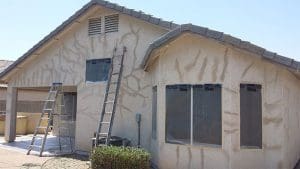
At the Arizona Painting Company, we always encourage safety when painting. Wear a face mask at all times and, if you are handling any sort of chemical product, you should also wear gloves. If you are planning on using a ladder to reach higher areas, make sure that it is sturdy and on a level surface. Keep three points of contact with the ladder when painting and do not overstretch.
It’s also important to keep a clean work area that is free of obstacles to avoid tripping. Ensure proper ventilation when painting indoors to minimize exposure to fumes, and always read the labels on paint cans and follow the manufacturer’s safety instructions. If you’re unsure about a product or technique, don’t hesitate to contact our professionals. Your safety is just as important as the final result.
Signs Your Exterior Paint Is Already Failing
Arizona homeowners should walk their exterior at least once a year — ideally before monsoon season — and look for the following:
- Chalking — a powdery residue on the surface when you run your hand across it, indicating UV breakdown of the paint binder
- Fading — color loss that is uneven across surfaces, especially pronounced on south and west-facing walls
- Peeling or flaking — particularly around trim, soffits, and window and door edges
- Bubbling or blistering — moisture or heat trapped beneath the paint film
- Cracking — either in the paint film itself or in the stucco beneath it
- Staining or streaking — often a sign of surfactant leaching or moisture intrusion behind the coating
Any of these signs warrant a professional assessment before the next monsoon season. Catching paint failure early — before moisture gets into the stucco or substrate — is significantly less expensive than addressing the damage after the fact.
Arizona Painting Company: Built for Arizona Exteriors
Our crews paint Arizona homes every day across Phoenix, Tucson, Scottsdale, Chandler, Glendale, Sun City, Cave Creek, and the surrounding communities. We know which products hold up in this climate, we don’t cut corners on surface preparation, and we back every exterior project with a written warranty because we’re confident in what we deliver.
If your exterior paint is showing signs of failure — or if it has been more than five years since your last repaint — contact Arizona Painting Company for a free exterior assessment and estimate. No pressure, no obligation. Just a straight answer from a team that knows Arizona homes. For full painting services and professional advice from a local painter, contact the Arizona Painting Company today.