
Paint Colors to Boost Your Office’s Productivity
There are a variety of things you can do that increase the productivity of your team, some simple and easy, some technical and very expensive. One relatively easy but incredibly effective way to build a productive atmosphere is choosing the right color scheme. If you are planning on painting your office, the right paint colors for your type of business or your business goals can put you on the path to success.
Can Paint Color Really Boost Productivity?
There are plenty of theories that affirm paint color matters for a lot more than aesthetics. Think about being stuck in a grey, concrete room, with grey desks and chairs, file cabinets and carpeting. Do you think you’ll work to your best ability in that room? Probably not. The boring environment is likely to put you to sleep. Choosing the color that works for your office depends on what goes on from nine to five. Let’s take some basic paint colors and learn how they best connect to productivity.
Calming Colors
Blue
Many people find blue to be relaxing, stable and calming. What may surprise you is that blue is the most productive color for our minds. It stimulates the mind and makes detail-oriented jobs easier. Blue is a great color for accountants or software developers. Anyone engaged in heavy mind work can benefit from blues.
Green
Green is all about balance and harmony. If you want an office that is calm, reassuring and tranquil, green is the way to go. This is why green is prevalent in many medical offices. Also, if you work with a lot of money negotiations or agreements, green is said to be the most conducive to successful money transactions. Green also lessens eye strain, so it’s a productive color for offices requiring employees to put in long hours, such as an accounting firm during tax season.
Energetic Colors
Red
Red stimulates us. Warnings are red. Sale prices are red. McDonald’s is red. Red is particularly stimulating for the physical body. If your business requires people to be on their feet and active, red might be a productive choice. Just make sure to be careful not to overdo it, or all that stimulation can manifest as anger or anxiety.
Yellow
Yellow stimulates our emotions and if you have a creative group with high energy, yellow can bring a lot of joy and productivity into the mix. For most of us, a muted yellow paint color or yellow accent pieces are preferable to a neon yellow wall across from our desk. Yellow is also thought to be conducive to inspiration and innovation. Developing software for apps, designing an architectural marvel or writing the next great novel are all instances where pops of yellow fit the environment.
Orange
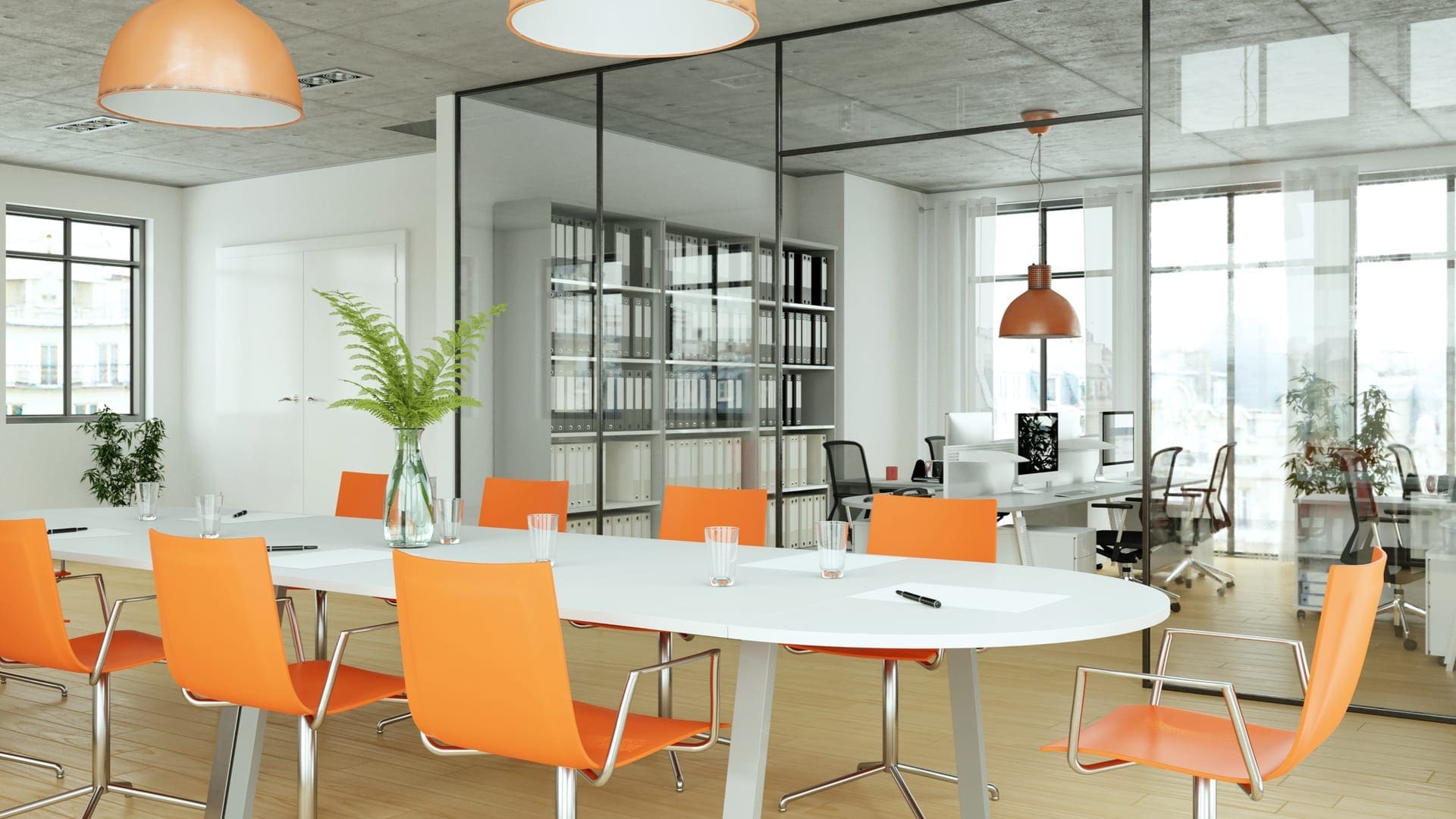
While you probably won’t paint the office orange, if employees seem to be a little sluggish, adding some pops of orange could perk things up. Pillows, flowers, lamps and even a bowl of fruit on an end table can all contain some orange to brighten the day.
Purple
Be careful when choosing purple. It is an effective color for producing luxurious office spaces but can be overpowering if the wrong tone is used. Businesses that are focused on spirituality often use deep purple in products, marketing and visitor areas. If you are unsure of the types of customers you want to attract to your business, choose a neutral tone for balance.
Neutrals
Neutral colors, as a general rule, will be softer and more relaxing. While this may work in waiting rooms or other client access rooms, individual offices can benefit from adding some color. Colors influence our mood and enhance our productivity.
White
Most people don’t really think of white as a color. The truth is, many off-white shades are very appropriate for some office space. The perfect shade of white can actually give a room the glow of natural sunlight.
Grey
One of the most neutral colors in any space is grey. Using grey in productive areas can suggest a dull and lifeless environment, which isn’t exactly motivational. Conservative use of grey, however, can produce elegant work or customer-facing areas, provided there is sufficient ambient lighting or color balance.
Using Color and Feng Shui in the Workplace
Color can also play a role in the overall balance and atmosphere of a workplace. In feng shui, different colors are associated with natural elements and the feelings they may bring to a space. Greens can represent growth and renewal, reds and oranges can add energy and warmth, earth tones can create a grounded and stable environment, and blues can contribute to a sense of calm and clarity. Color is connected to five natural elements that are believed to influence the energy of a space and these ideas can provide another way to think about which office paint colors best support the atmosphere you want to create.
Choose Office Paint Colors Based on the Space
Different areas of an office may benefit from different color schemes based on how the space is used. Calming or neutral colors may work well in high-stress work areas and break rooms, while more energetic accent colors can add interest to collaborative or client-facing spaces. Rather than using the same color throughout the entire workplace, consider how reception areas, conference rooms, individual offices and shared spaces should feel. Room size and lighting should also factor into your decision, since darker colors can make smaller spaces feel more enclosed and paint colors can look dramatically different depending on natural and artificial light.
Make Sure Your Paint Color Represents Your Brand
The color of your office does not just impact your employees; it represents your brand to anyone who walks through your doors. What does your current office décor say about your brand and business? Plain white walls lack creativity and energy, but colors that are too wild may not match your style or target audience. What you need are colors that represent your brand and create the vibe you want others to feel when they think about your business.
-
- Modern or contemporary styles. If you want your brand to come across as modern or cutting-edge, the sky’s the limit on colors. Go bright, go bold. Show that you are not afraid to take risks, even when it comes to your color scheme.
- Classic or elegant. For serious enterprises that want to create a classic, elegant or sophisticated atmosphere, more subdued tones may be warranted. A striking gray for the conference room or rich, natural hues for the reception area can create the effect you desire.
- Innovative and youthful. Bright and light colors are energetic and speak to youth and vitality. If your target audience for your business is young people, speak their language and stay away from the neutral or basic options.
The colors in your office can say so much about your business and brand. If you have white walls, you are saying more than you know and you may not like the conversation. Creating an image for your company that will make a lasting impression is important. Find the best colors and design for your office to match the message you want others to take away with them after they visit your business.
Call Arizona Painting Company For Commercial Paint Projects
If you would like to cast a professional eye over your office or business premises, the Arizona Painting Company can help. We understand the psychology of color in any space. Our team of professional painters can work quickly and efficiently, ensuring minimal disruption to productivity. Call today for an accurate and affordable quote. We provide commercial painting and residential painting throughout Arizona.
Renovating the office may be a little easier now that you know which colors correspond with the vibe that you want for your space. Let the professionals at Arizona Painting Company transform your office space into the perfect environment for productivity. Contact us today for your free estimate.